Since early 2020, the whole world has been affected by a health crisis with far-reaching consequences on the economy. The pandemic turned everything upside down, changed the way everyone lived and transformed the economic landscape.
What are today’s pandemic’s economic and social impacts?
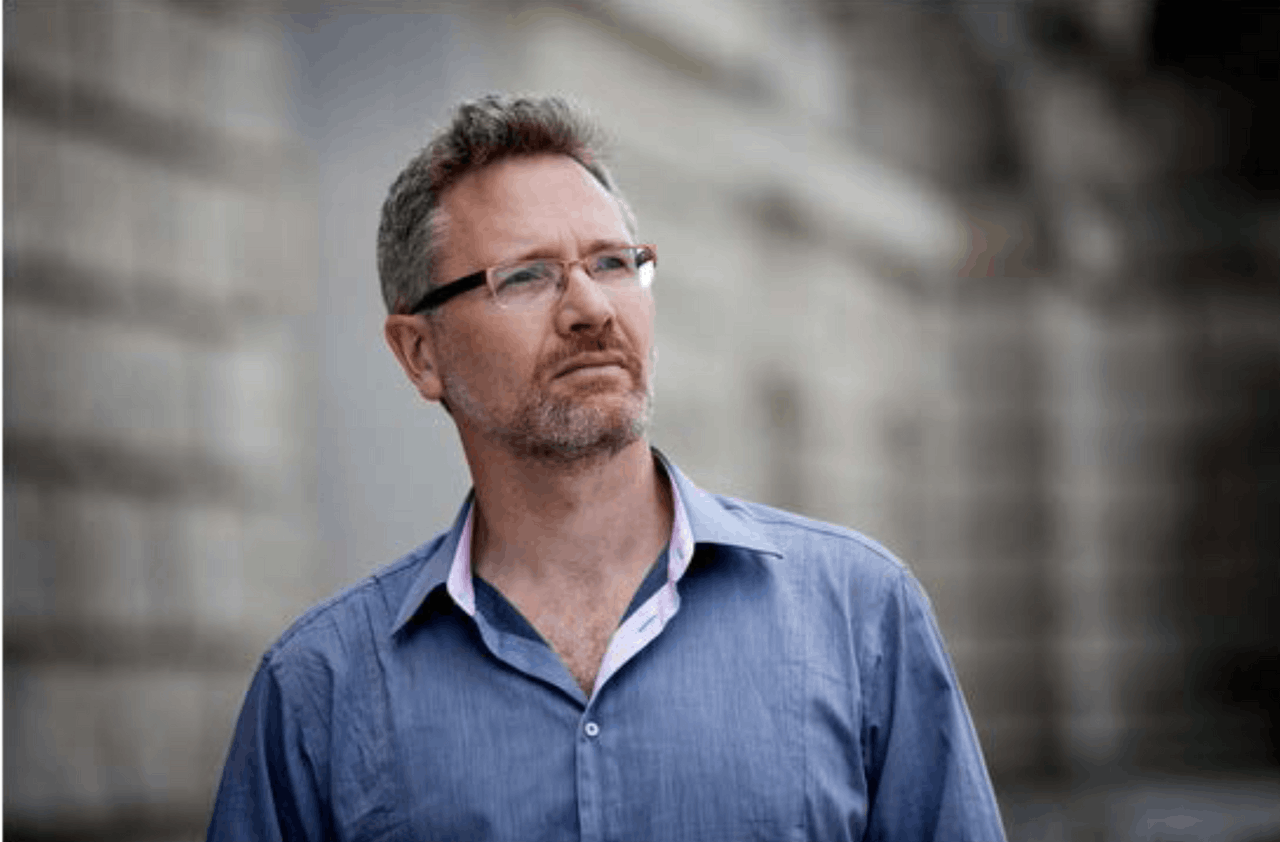
Adam Tooze. —“The crucial thing to say is that we are not done with the pandemic. We are seeing a dangerous resurgence in several European countries of a new strain. So far it is not causing panic because it does not seem to have the same lethality. But it is a warning that this disease continues to mutate and to infect and now reinfect people. In Asia the impact is far more dramatic. Hong Kong in recent weeks has gone through a crisis as bad as anything we saw in Europe in the spring of 2020. They have a largely unvaccinated and immuno-naive elderly population that is in great danger. And the same is true for mainland China, where there are 50 million unvaccinated people over the age of 60. What we will see in China are a series of more or less dramatic lockdowns that will likely continue to impact supply chains.
As far as the broader global economy is concerned, we have to differentiate between sectors. Some parts of the economy in Europe and elsewhere are back to normal and dealing with the effects of the rather rapid recovery from the 2020 shock. This applies, of course, to the entire energy economy and everything associated with it, as well as the financial sector. The problem is how to deal with surging prices, inflation and the likely central bank reaction.
Other sectors, however, remain deeply shocked and are still in recovery mode. This applies above all to the travel, tourism and hospitality sectors. In modern service-oriented economies, these are large sectors with substantial employment. Their balance sheets have suffered very serious damage and it may take years to fully recover. If the 2022 tourism season is interrupted like those of 2020 and 2021, the damage will go very deep.
Finally, we should recognise and reckon the impact that repeated shutdowns and medical emergencies have had on the household sector and the care and education sectors that are intimately associated with it. Families are in many cases still in shock. Normal educational development has been interrupted for months on end. People have had to fundamentally reorganise their work-life balance. The impact on women has been particularly dramatic. All of those effects will be prolonged and amplified if we have further waves of infection.
Behind the relatively robust-looking numbers for the labour market and GDP, in other words, lurk a variety of more complex and long-lasting effects.
What lessons can we draw for the future?
“We need to be better prepared and we need to act more swiftly when the worst case arrives.
We need to understand the degree of global interconnection. No one is safe until everyone is safe is not just a platitude or a slogan. It is literally true.
We need to invest more resources both in excess capacity in our health systems. There is no amount of money we could spend on vaccine development and research that would not pay dividends.
The rate of return is simply spectacular, especially in devising a truly global distribution system for vaccines.
Investment in social infrastructure and resilience pays dividends. Digital infrastructure is key here. We can manage socially distanced life if we have the digital infrastructure we need.
That needs to be available across society and in institutions from schools to hospitals to care homes.
Yesterday’s crisis was Covid, today’s is Ukraine. Are we ready for this new crisis and how it will affect the world?
“It is too early to tell. The most basic and dramatic shock of Ukraine is that it is indeed a war. Not simply an invasion by Russia, but a genuine battle in which the outcome is uncertain and the risk of escalation is huge.
Europe and the US are scrambling to respond. Perhaps the example of 2020 will serve as a template. Perhaps it will show how European states can work effectively together. Perhaps it will serve to loosen restrictions that are made for fair weather conditions but serve as a disastrous limit on state capacity in moments of emergency. Let us hope that as in the case of the Covid crisis the EU finds a way to use the crisis to double down on its longer-term goals like addressing the climate crisis. We live in an age of polycrisis, multiple overlapping and interacting crises, in which the whole is more dangerous than the sum of the parts. Policy has to respond to that.
Why did you accept to be a speaker for this new edition of the Economy Day?
“I accepted because I was fascinated by the opportunity to be in dialogue with business leaders, economists and decision makers in a country that is at the very heart of Europe.”
Adam Tooze will be speaking in person at the Journée de l’Économie, on Tuesday 29 March 2022 in Luxembourg.
To register for the Economy Day: https://www.jecolux.lu/events/economyday/index.html