In the rapidly evolving business landscape, sustainability has emerged as both a moral imperative and a strategic advantage. Companies face a complex web of pressures, including regulatory mandates, changing customer expectations, market dynamics, and investor scrutiny. To navigate this terrain effectively, businesses must strike a delicate balance between long-term sustainability goals and immediate actions. This article outlines three essential concepts companies can leverage to balance short-term value-driven sustainability actions with long-term sustainability responsibilities and efforts.
In the rapidly evolving business landscape, sustainability has emerged as both a moral imperative and a strategic advantage.

Double materiality – your compass for action
The concept of ‘materiality’ is not new. It stems from finance, referring to information that is considered material, and should therefore be disclosed, if its omission or misstatement could influence the economic decisions of investors and/or users. The principle of ‘double materiality’ expands on this initial financial definition into the world of sustainability. First, it assesses how a company’s actions may impact the environment and society, often referred to as the ‘impact materiality’ perspective. Secondly, it examines how external environmental or social factors may affect the company’s financial performance and reputation, often known as the ‘financial materiality’ perspective. These two perspectives are essential in allowing companies to understand not only their environmental and societal impact, like GHG emissions or labor considerations, but also how to respond to the risks and opportunities from external factors, including climate related risks. Understanding these dual dimensions gives companies a clear compass to focus on sustainability issues where they can make a substantial impact as well as where the critical risks and opportunities lie for their specific business. The double materiality is the foundation for a differentiated and focused sustainability transformation.
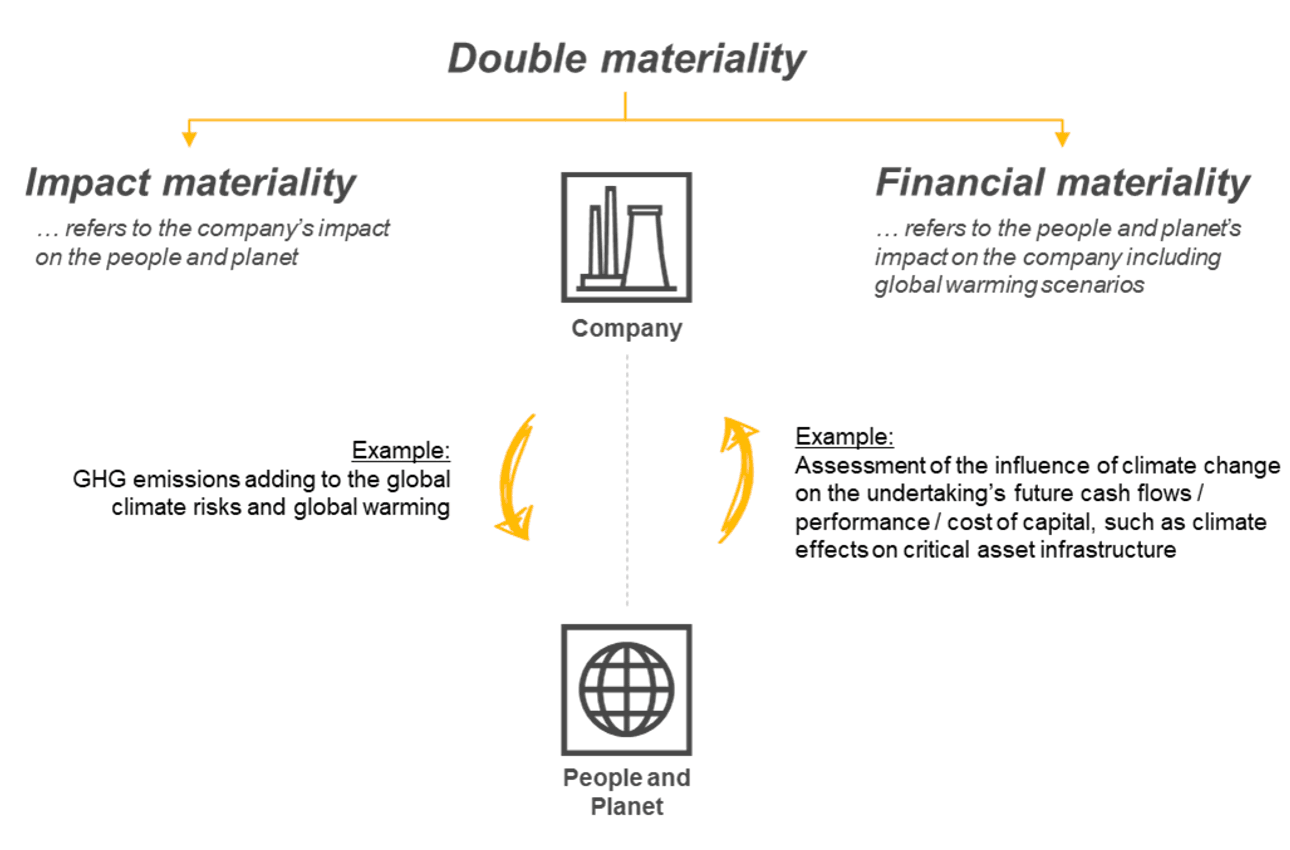
Double materiality Illustration: PwC Luxembourg
Understanding the Value Chain for Sustainable Business Practices
As a second, and related, action, companies must comprehensively understand their value chain. This approach, also mandated by regulations like the Corporate Sustainability Reporting Directive (CSRD) and the Corporate Sustainability Due Diligence Directive (CS3D), requires looking beyond the organization's boundaries, from suppliers to end-users.
Analyzing the value chain provides a holistic view of a company's impact on sustainability, from greenhouse gas emissions (the so called “Scope 3” emissions are those generated in a company’s value chain) to other environmental and social issue. It helps identify "hotspots" where operations may have significant adverse effects. Moreover, it reveals potential risks and opportunities. For instance, a company in the consumer-packaged goods industry identified a critical dependence on environmentally impactful tier 2 suppliers, prompting a strategic shift to diversify the supplier base, reducing environmental risks and enhancing resilience.
In other words, sustainability is not just about minimizing negative impacts but also seizing opportunities and enhancing resilience. By examining the value chain, companies can identify actionable steps that contribute to environmental and societal well-being, aligning with long-term sustainability goals.
Embracing the Sustainability Transformation Culture and Journey:
Third, for sustainability to become a fundamental aspect of business strategy, organizations must recognize that every action has far-reaching consequences on people, processes, and technology. In practice, we see that companies that embrace and promote a sustainability culture dramatically increase adoption of the business strategy.
We want to put the emphasis here on the transformation efforts required by reporting and decarbonization programs, which many companies today are dealing with.
To produce sustainability reports effectively, people need training and empowerment in sustainability expertise, while fostering a culture of ownership of the data. Processes should be restructured to integrate sustainability data seamlessly, ensuring data quality and adherence to reporting standards. Advanced technology, such as automation and data analytics tools, is essential for efficient data collection and processing. Integrated reporting software enhances accuracy, timeliness, and transparency. These changes enable organizations to generate accurate, comprehensive, and timely sustainability reports, meeting regulatory requirements and stakeholder expectations.
Similarly, implementing decarbonization programs necessitates transformations in people, processes, and technology. People need to acquire expertise in carbon reduction strategies and sustainability, fostering a workforce aligned with decarbonization goals. Processes should be revamped to integrate carbon reduction efforts seamlessly into operations, from supply chain management to energy efficiency measures. Advanced technology, including data analytics and renewable energy solutions, plays a critical role in monitoring and implementing decarbonization initiatives effectively. These changes enable organizations to significantly reduce carbon emissions and adapt to a more sustainable and low-carbon future.
Conclusions
In the evolving business landscape, companies must proactively address sustainability challenges. In this short article, we have focused on three key actions. Firstly, pursuing materiality requires to engage with stakeholders to identify and prioritize environmental, social, and governance issues. Secondly, conducting a comprehensive value chain analysis, reveals sustainability hotspots and emphasize collaboration and innovation throughout the supply chain.
In the evolving business landscape, companies must proactively address sustainability challenges.

Lastly, embracing sustainability transformation means setting ambitious goals, embracing a sustainability culture, adopting technology, and preparing for regulatory compliance, aligning sustainability with core business strategies for resilience and innovation. These concrete actions empower companies to embark on their sustainability journey, contributing to a responsible and thriving future.