
On the face of it, this is a simple question, and it is one, we at Cascade have regularly asked our prospective clients since launching our platform in March 2020. However, we are yet to receive a quick and positive answer.
But why is this so complicated for them?
In our view this is due to the combination of two elements:
1. Overuse of excel as a source of storing client related data
2. The popularity of stand-alone name screening tools
The first point is common knowledge. A large number of firms persist with an excel ‘Master Client List’ divided into dozens of spreadsheets in which clients and their related parties are identified. The second point we made is more interesting, as it may sound controversial.
We will therefore repeat it: part of the problem is popularity of stand-alone name screening tools!
This most popular combination is a recipe for highly ineffective, risky and very time-consuming AML and compliance processes. Firms and teams are juggling the data between excels, name screening tools and folders. Data is rarely up to date as a consequence and all this before we look at the struggles relating to reporting and compliance obligations. The below diagram is a visualisation of this process, with all its interconnectivities.
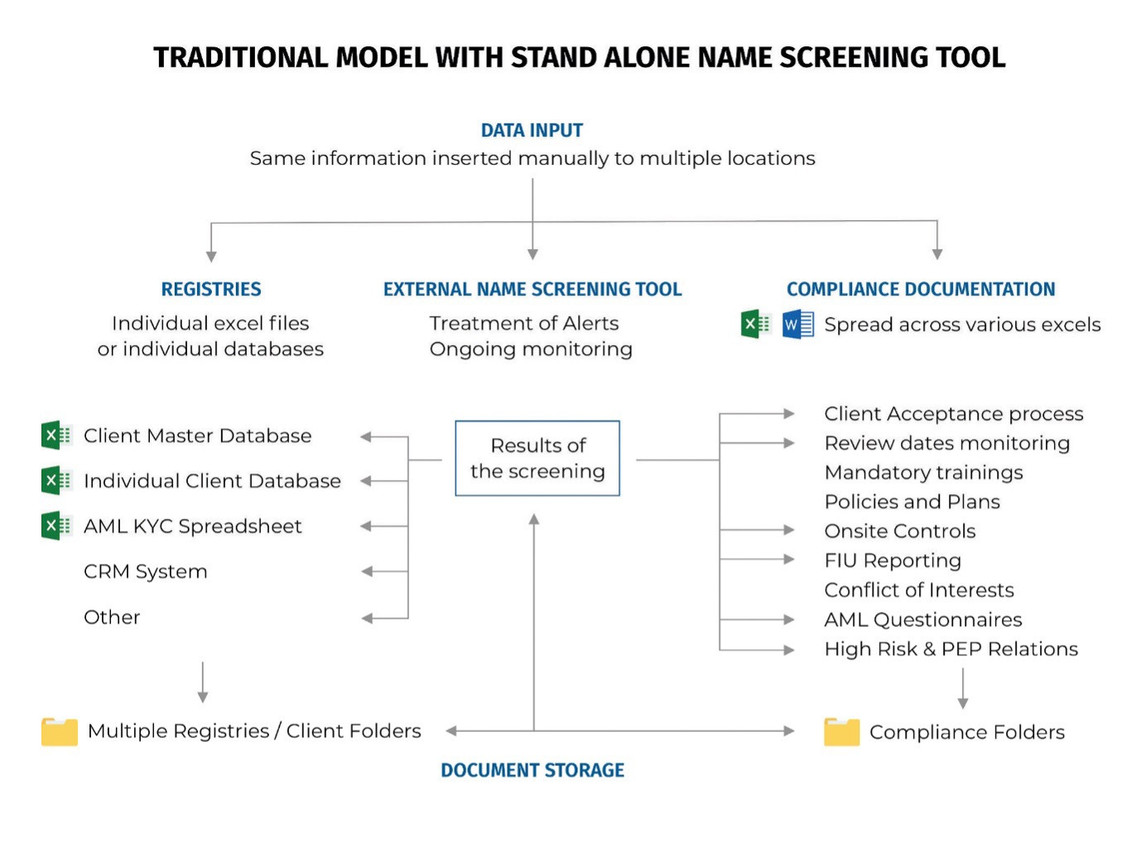
Traditionnal model with stand alone name screening tool Cascade
So if the above seems familiar, then you are a firm that would answer ‘NO’ to our initial question.
The answer ‘YES’, is only possible where client related data and AML KYC processes are executed within a single tool, or tools with full integration which, as we know, is difficult to achieve.
Where Cascade differs to many other software providers is that we put the client list at the heart of the solution. Think of a modern CRM that centralises data via clean registers of clients and their related parties: whether directors, beneficial owners or other. This allows our users to have a good overview of who is who and what they should be requesting from each.
Secondly, we offer a complete AML/KYC framework: which documents should be added to the client file, inbuilt name-screening, questionnaires and country risk evaluated. The system then controls periodic reviews, through automated monitoring and reminders.
Thirdly, and not to be underestimated, is the reporting aspect. Internally as well as answering auditor questions or filing CSSF / OEC questionnaires. The latter typically requiring companies to identify number of high-risk clients, anyone linked to high-risk jurisdictions, how many PEPs are linked to their client structures or similar. Having a centralised database containing all this information is therefore key to ensure regulatory protection via fulfilling one’s obligations.
By digitalising the whole RBA process in Cascade means the above can be efficiently completed. It also means our opening question can be easily answered by our clients via one view with live statuses of files allowing you to be back in full control over the AML and compliance processes.
Find out more about cascade here: https://www.cascade.lu